
As an Amazon Associate, I earn from qualifying purchases. but I only recommend products I personally use for my own family.
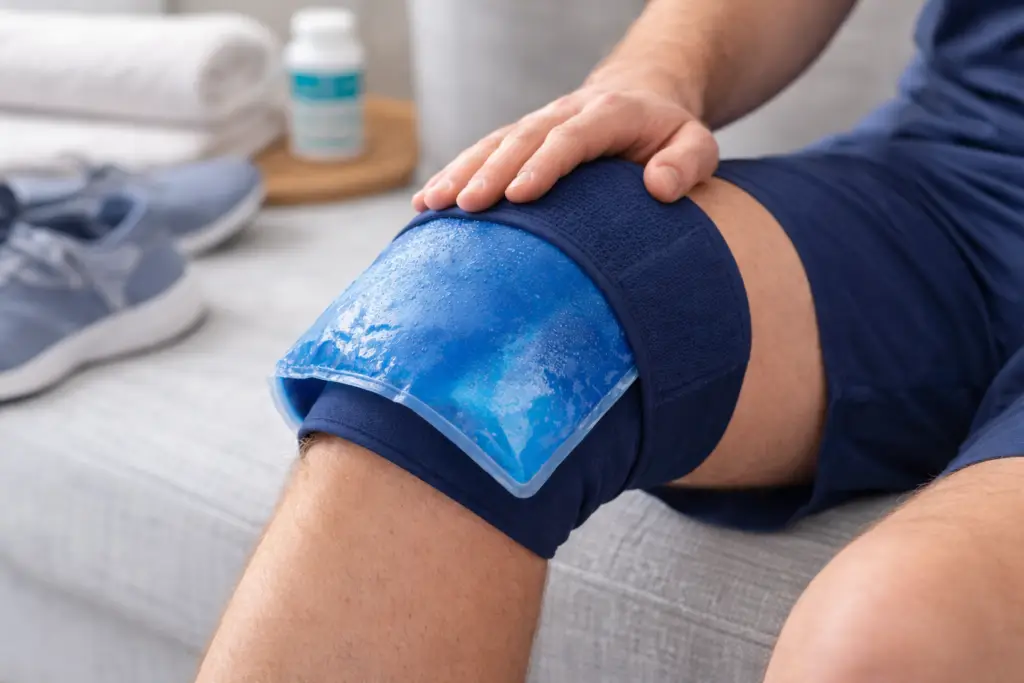
When your athlete limps through the door after practice, the right ice pack can make a meaningful difference in recovery speed and comfort. Unlike single-use instant cold packs used on the sideline, reusable gel packs are engineered for sustained home recovery — providing consistent therapeutic cold therapy where you have freezer access and time to manage swelling properly.
As a pharmacist and sports mom, I’ve evaluated these products through both a clinical and practical lens. Here’s the science behind why cryotherapy works — and which packs do it best.
Cryotherapy — the therapeutic application of cold — is one of the most studied interventions in sports medicine. Understanding the physiology helps you use ice packs more effectively.
The standard clinical recommendation:
Note: More is not better. Prolonged or excessive icing can impair motor function and may interfere with tissue healing. Current research recommends prioritizing early application over extended duration.
Not all gel packs are created equal. Here’s what to evaluate from a pharmacist’s perspective:
Clinical Profile:
Pharmacist Review:
The FlexiKold is one of the better-engineered consumer gel packs on the market. Its gel matrix is formulated to remain pliable at freezer temperatures, which maximizes skin contact surface area and therefore therapeutic effectiveness. An excellent all-around choice for sports families.
Estimated Cold Duration: 25–35 minutes of therapeutic cooling (sub-15°C at skin level)
Best For: Knees, hamstrings, ankles, shoulders
👉 Shop FlexiKold Gel Ice Pack on Amazon
Clinical Profile:
Pharmacist Review:
Physical therapists use the ColPac for good reason — its superior cold mass is particularly effective for significant acute swelling and post-competition inflammation. Important clinical note: This pack reaches very low temperatures and should always be used with a cloth barrier. Better suited for structured recovery sessions than quick independent use, especially for younger athletes.
Estimated Cold Duration: 30–45 minutes of therapeutic cooling
Best For: Significant joint swelling, post-game inflammation, large muscle groups (quads, hamstrings, hips)
👉 Shop FlexiKold Gel Ice Pack on Amazon
Clinical Profile:
Pharmacist Review:
The dual hot/cold functionality makes this an intelligent value choice for sports families. Cold for acute injuries (first 48–72 hours); heat for chronic aches, muscle tightness, or later-stage recovery. Cold duration is moderate but sufficient for standard icing protocols.
Estimated Cold Duration: 15–25 minutes of therapeutic cooling
Best For: General sprains, muscle soreness, chronic aches; families wanting one versatile pack
👉 Shop FlexiKold Gel Ice Pack on Amazon
Clinical Profile:
Pharmacist Review:
What sets TheraPearl apart is the body-part-specific design. Instead of a generic flat pack, you select a wrap shaped for exactly where your athlete is hurting — an ankle wrap that contours to the lateral malleolus, a knee wrap that seats properly over the joint line, a shin wrap for shin splints. The gel bead construction holds temperature consistently and remains comfortable against skin. Excellent choice for recurring site-specific injuries.
Estimated Cold Duration: ~20 minutes of consistent therapeutic cooling
Best For: Ankle sprains, knee injuries, shin splints, wrist/elbow — wherever shape-conforming fit matters most
👉Shop FlexiKold Gel Ice Pack on Amazon
Clinical Profile:
Pharmacist Review:
Ankle sprains are the most common sports injury — and generic flat packs simply don’t cover the lateral malleolus effectively. The Comfytemp wraps around the full ankle anatomy and stays in place hands-free, which is especially practical for athletes who need to stay mobile during recovery. The FSA/HSA eligibility is a real bonus for families — check with your plan administrator.
Estimated Cold Duration: ~30 minutes of therapeutic cooling with gel pack
Best For: Ankle sprains, plantar fasciitis, Achilles tendonitis, heel spur, post-ankle surgery
|
Product |
Cold Duration |
Flexibility |
Heat Option |
Recommended Body Areas |
Best Use Case |
Amazon Link |
|
FlexiKold Gel Ice Pack |
25–35 min |
Excellent |
No |
Knee, Ankle, Hamstring, Shoulder |
Best overall home recovery |
|
|
Chattanooga ColPac |
30–45 min |
Moderate |
No |
Large Joints, Quads, Hips, Back |
Significant swelling, post-competition |
|
|
IceWraps Hot & Cold Pack |
15–25 min |
Good |
Yes ✓ |
General Use, Full Body |
Budget-friendly, dual hot/cold |
|
|
TheraPearl Sports Pack |
~20 min |
Excellent |
Yes ✓ |
Ankle, Knee, Shin, Shoulder, Wrist |
Body-specific contoured fit |
|
|
Comfytemp Ankle Wrap |
~30 min |
Excellent |
Yes ✓ |
Ankle, Foot, Plantar Fascia, Achilles |
Best wearable ankle-specific pack |
Cold duration estimates reflect therapeutic sub-15°C skin-level cooling under standard use conditions with a single cloth barrier. Results vary based on freezer temperature, ambient temperature, and body contact area.
Designed to wrap around the entire knee joint, the KingPavonini XXL is a standout pick for athletes recovering from ACL, meniscus, or patellar surgeries. Its oversized format ensures full joint coverage that standard flat packs miss. 👉View on Amazon
The REVIX features a plush-lined neoprene sleeve with a stretchy strap that secures directly to the knee, combining cold therapy with gentle compression — mimicking the RICE (Rest, Ice, Compression, Elevation) protocol that clinicians recommend. The set of two lets you alternate packs continuously. 👉View on Amazon
Three packs with adjustable straps that secure to knees, lower back, elbows, and more. The set format is smart for sports families managing multiple athletes with different injury sites simultaneously. Hot/cold dual functionality adds versatility. 👉View on Amazon
The Cryo-Max is a phase-change cold pack that stays therapeutically cold for up to 8 hours — far longer than any gel pack. It does not require a freezer (activates via refrigeration or chemical reaction). Excellent for post-surgical recovery or situations where a freezer isn’t accessible. Note: less flexible than gel packs; best for stationary recovery. 👉View on Amazon
Top Picks: FlexiKold (standard/large) or KingPavonini XXL (post-surgery)
The knee’s complex anatomy demands a flexible pack with good coverage. For major surgeries, the KingPavonini’s wraparound design provides superior joint coverage. The FlexiKold is ideal for day-to-day sprains and tendinitis.
Top Pick: Comfytemp Ankle Wrap or TheraPearl Ankle/Wrist Wrap
Ankle sprains are the most common sports injury. Wearable ankle-specific packs that conform to the lateral malleolus — the most common injury site — outperform generic flat packs significantly.
If you’re treating a mild injury, follow our full guide to sprain treatment at home for step-by-step care instructions.
Top Pick: FlexiKold (large) or TheraPearl Shoulder Wrap
The shoulder’s rounded geometry makes flexibility paramount. A rigid pack contacts only the top of the joint, missing the anterior and posterior structures most commonly injured.
Top Pick: Chattanooga ColPac (large or oversize)
Large muscle groups benefit from a higher-cold-mass pack. The ColPac’s extended cold duration is well-suited to the greater tissue volume needing therapeutic coverage.
Top Pick: TheraPearl Shin Wrap or FlexiKold (standard)
The tibia’s subcutaneous location (minimal fat overlying the bone) means cold penetrates quickly. A contoured shin wrap keeps the pack in contact during the full 15–20 minute session.
Top Pick: Medvice 3-Piece Set with strap or Comfytemp Back Pack
Lower back injuries benefit most from hands-free wearable packs that stay in contact without requiring the athlete to hold them in place. Strap-secured packs allow rest in a neutral position.
Top Pick: IceWraps or TheraPearl Wrist/Oval Pack
For minor injuries, overuse, or small joints, a standard flexible gel pack or contoured TheraPearl oval is appropriate. The IceWraps value is especially good here.
For athletes dealing with early-season tightness, read our Preseason Soreness Recovery Guide.
Information presented here is for educational purposes only and is not intended as medical advice. Always consult a qualified healthcare provider for diagnosis and treatment of medical conditions. The information provided here is not a substitute for professional medical care.
The following peer-reviewed sources informed the clinical guidance provided in this article:
Get my pharmacist-approved game-day prep list delivered straight to your inbox — everything you need to pack to be ready for every practice, game and tournament.
Created by a pharmacist for sports parents.
Know what to bring and how to be ready for every game and practice.
You have successfully joined our subscriber list.