Instant Cold Packs (Sideline Non-Negotiable)
Cold therapy is one of the first lines of response for sprains, strains, bruises, and swelling. Instant cold packs are perfect for the sideline because they require no refrigeration and activate with a simple squeeze.
Why you need them:
- Reduces swelling quickly after impact
- Easy to use — no prep needed
- Lightweight and compact for any bag
What to look for:
- Single-use packs that activate on demand
- At least 2–3 packs per game day
- Size appropriate for ankles, knees, and wrists
 Instant Cold Packs
 Pharmacist tip: Always wrap a cold pack in a thin cloth or gauze before applying to skin. Direct contact can cause frostbite, especially in younger athletes.
Adhesive Bandages (Various Sizes)
No first aid kit is complete without a solid assortment of bandages. Turf burns, blisters that pop, and minor cuts happen in every sport and every season.
Pack a variety of sizes:
- Small dots for fingertip cuts
- Standard strips for general scrapes
- Large rectangular pads for bigger abrasions
- Flexible fabric bandages that move with the athlete
Why fabric matters: Fabric bandages hold better during sweaty, high-movement activity than standard plastic ones.
Sterile Gauze Pads + Medical Tape
For wounds that are too large for a standard bandage, gauze pads are your go-to. They absorb more, provide better coverage, and can be secured with medical tape or cohesive wrap.
Useful for:
- Turf burns and road rash
- Deep scrapes that need more coverage
- Holding wound dressings in place
Antiseptic Wipes and Wound Spray
Cleaning a wound quickly and properly is the most important step before bandaging. Antiseptic wipes are individually wrapped, easy to use, and don’t require water — making them ideal for outdoor sidelines.
Why this matters:
- Reduces infection risk in turf and grass wounds
- Alcohol-free options cause less stinging (great for kids)
- Easy to use one-handed while managing an upset athlete
Consider also adding:
- Antiseptic spray for larger areas
- Hydrogen peroxide-free cleansers for sensitive skin
Dermoplast Antiseptic Wipes (individually wrapped)
Dermoplast First Aid Spray
Pain Relief (Age-Appropriate Options)
Having OTC pain relief on hand can make a meaningful difference — especially during long tournament days. Always follow label dosing instructions and individual health considerations.
What to consider packing:
- Acetaminophen (children’s and adult formulations)
- Ibuprofen (for athletes old enough and without contraindications)
- Topical pain relief spray or roll-on for localized soreness
⚠️ Note: Always check with a healthcare provider before giving any medication to a young athlete, especially if they have underlying health conditions.
Athletic Tape + Pre-Wrap Foam
Athletic tape is one of the most versatile tools in any sports kit. From wrapping a sprained finger to securing a bandage or providing light joint support, it earns its spot every single game day.
Best uses:
- Finger and wrist support
- Securing ice packs or gauze
- Blister prevention on heels and toes
- Light ankle support between plays
Pro tip: Always pack pre-wrap foam underneath athletic tape to protect the skin, especially for athletes who tape frequently.
Blister Care Supplies
Blisters are one of the most common — and most underestimated — youth sports injuries. A bad blister can end a game or even a tournament weekend if left untreated.
Pack these essentials:
- Hydrocolloid blister bandages (protect and cushion)
- Moleskin padding (cut to size over hot spots)
- Body Glide or blister balm for prevention
💡 Pharmacist tip: Treat hot spots before they become blisters. If your athlete says their shoe is rubbing, that’s the time to act — not when the skin is already broken.
Elastic Compression Wrap
Compression wraps do double duty — they support mild sprains and strains while also helping control swelling. Unlike athletic tape, cohesive wraps are self-adhering and reusable.
Why you need at least two:
- One for smaller joints (ankle, wrist)
- One for larger areas (knee, thigh)
Useful for:
- Wrapping a rolled ankle on the sideline
- Securing an ice pack in place
- Providing light compression during transport to care
.
Disposable Nitrile Gloves
This one gets skipped constantly — and it shouldn’t. Any time you’re managing a bleeding wound, you need gloves. It protects both you and your athlete.
Why nitrile over latex:
- Latex allergies are more common than people realize
- Nitrile is more durable and puncture-resistant
- Fits easily in a small zip pouch
Trauma Shears / Small Scissors
You’ll reach for these more often than you expect. Cutting tape, trimming gauze, or even removing a sock from a swollen ankle — a small pair of shears earns its place.
Saline Eye Wash
Dirt, grass, and debris in the eye mid-game is more common than you’d think — especially in soccer, baseball, and lacrosse.
Why it matters:
- Quickly flushes irritants without causing further damage
- Safe for all ages
- Doubles as a gentle wound rinse
Emergency Info Card
Every sports bag should include one. If you’re ever not the one managing the situation, this card can be critical.
Include:
- Emergency contacts
- Known allergies (medications, latex, foods)
- Existing medical conditions
- Insurance information
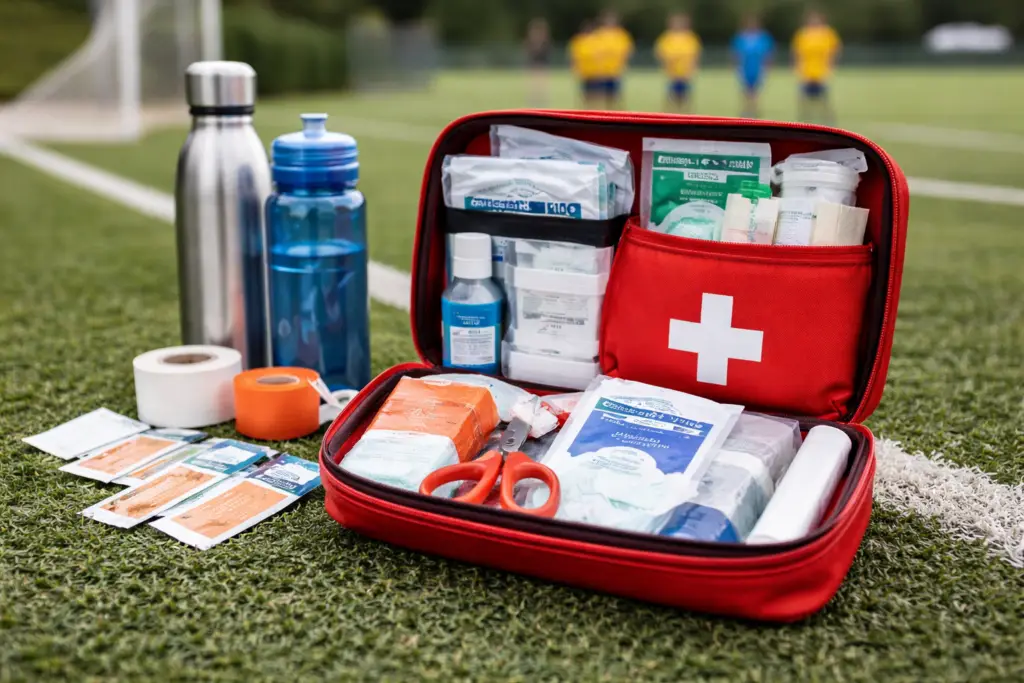
First Aid Bag
A good first aid kit is only useful if it’s organized and accessible. Look for a bag or pouch that’s clearly labeled, easy to zip open one-handed, and small enough to fit in a larger gear bag.
Final Takeaway
You don’t need a professional medical bag to be prepared on the sidelines. You need the right basics — organized, accessible, and ready to go before tip-off, kick-off, or first pitch. A well-stocked kit helps you respond calmly, protect your athlete, and handle common injuries confidently until professional care is available if needed.
❤️🩹Want My Free Sideline First Aid Checklist?
Get my pharmacist-aprooved game-day prep list delivered straight to your inbox–find everything you need to pack before every practice and tournament.